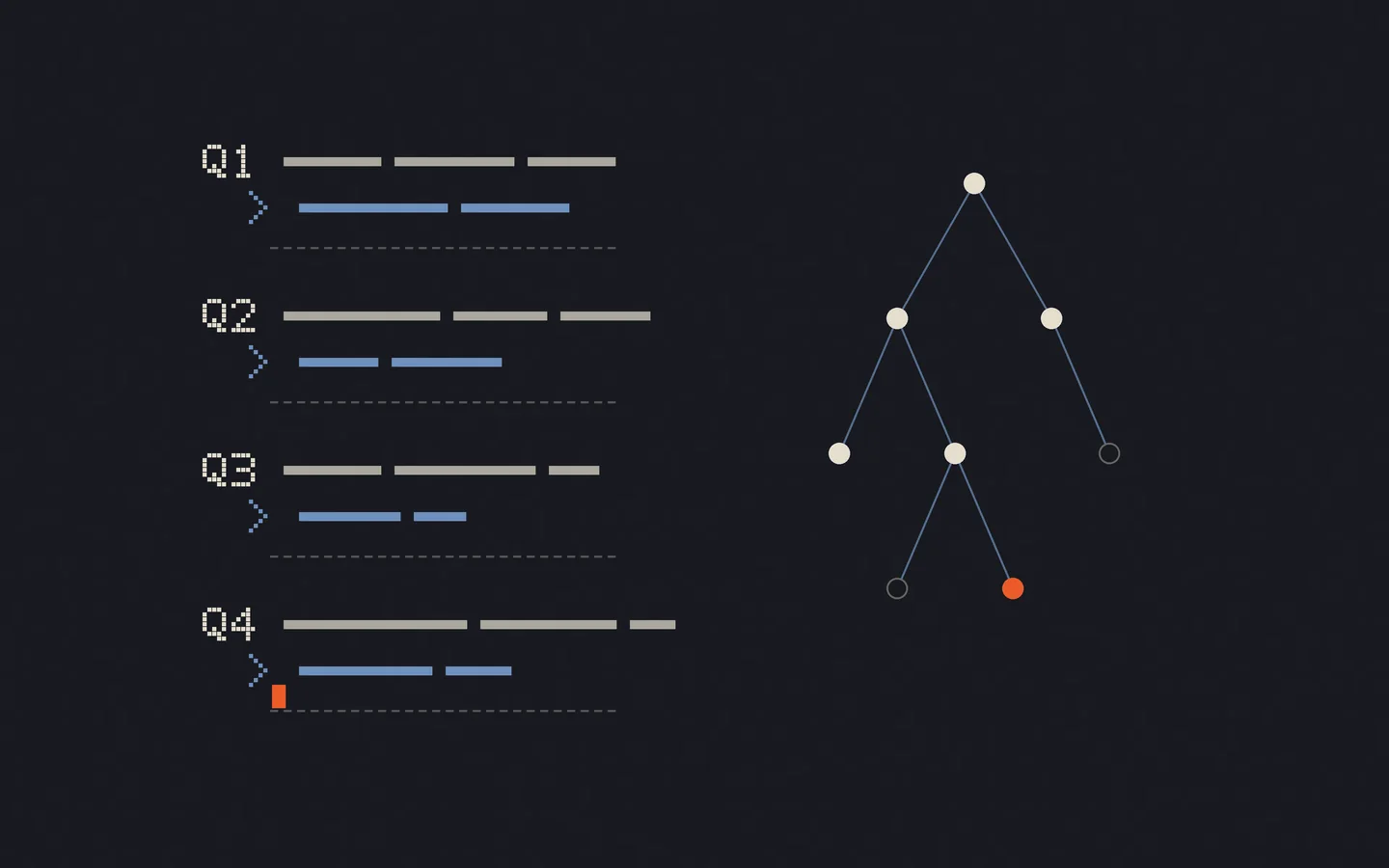
Matt Pocock’s skills make the agent ask you questions before it builds anything. Ours answer the questions that have a sensible default and leave a note saying so. Both of these are on purpose, and we think both are right.
Up front: I haven’t run his skills. I kept seeing them come up, including in Theo’s (t3.gg) video So I tried Matt’s skills… from August 18. So I had an agent read the repository line by line and put it next to our own workflow. Everything below comes from reading. Nobody here has used them.
The part where we compare stars
When we checked, his repository had 269,823 stars. Our workflow pack had zero. This post won’t explain that gap.
The repository opened in February. By March 23 Matt was writing that his grill-me skill had gone viral. Since August, mattpocock-skills has been in Claude Code’s official plugin marketplace. You can also copy the skill files into your own project with npx skills add and edit them.
Ask, or propose
Last reviewed: 2026-09-26, at commit c55ee46.
His README says grill-me and its sibling grill-with-docs are his most popular skills. Grill-me hands off to a shared skill called grilling. That skill interviews you in rounds. Each question gets a number and the agent’s recommended answer. The agent then waits for you before asking anything that depends on what you said. One line in it does most of the work: “Finding facts is your job, never the user’s.” Facts go to the agent, decisions go to you, and nothing gets built until you both agree you understand each other.
Our refine skill makes the opposite bet. When a question has a sensible default that nobody has contradicted, the agent settles it and labels the answer proposed, so the person who decides can overrule it later. Questions only a person can answer, such as product direction, cost or authority, stay open.
This post’s own ticket is a fair example. It had three open questions: the opening angle, whether to try his skills hands-on, and when to publish. Refine answered all three with defaults and recorded them on the issue. Grill-me would have put all three to me, each with a recommended answer, and waited for mine.
Neither one is free. Asking costs my attention now. Proposing costs a revert later, when a default turns out to be wrong. Asking is cheaper when the idea is still fuzzy and I’m the only source of intent. Proposing is cheaper when the ticket already says what we want and I have other things to read.
Who owns the process
His README warns that frameworks like GSD, BMAD and Spec-Kit take control of your process, and that bugs inside that process get hard to fix. His answer is small, composable skills you can take apart. He also separates skills only a person can start from skills the model can reach for on its own. A skill a person starts can never start another one of those, so every orchestrating chain begins with someone typing.
Our pack owns more of the process than that, and we meant it to. Capture, refine, prep, go and ship run in order. The issue tracker keeps the state. The chat can end whenever it likes. Ship won’t merge without a grant for that one issue, given in the current conversation. That’s a lot of process to have opinions about.
We end up in a similar place anyway. In both designs, a person has to start the orchestrating steps, and agents do the legwork in between. The real difference is how much of the path gets written down in advance.
Where his fit better
If you work at the keyboard alongside one agent, his skills are probably the better fit. The same goes if your intent lives in your head, or if you want to take three skills and leave the rest. The setup skill works with GitHub, GitLab, plain Markdown files, or any other tracker you describe in a paragraph. To-tickets splits a plan into thin end-to-end slices with blocking links. Code-review runs two separate reviews side by side, one against your coding standards and one against the spec, and never merges their findings. We’d happily steal that last idea.
Where ours fit, narrowly
Ours fit if the work outlives the chat, passes between several agents, and ends with someone releasing it who wasn’t in the room. The pack assumes Hydrant is the tracker. If it isn’t yours, most of the pack won’t help you, and his will.
Grilling someone relentlessly is a good way to find out what they want. Writing the answer down where the next agent can find it is how we avoid asking it twice.
Filed under PrinciplesHenry Kobutra with Claude
We post on X too. Mostly shipping, occasionally opinions. @usehydrant (opens in a new tab)